
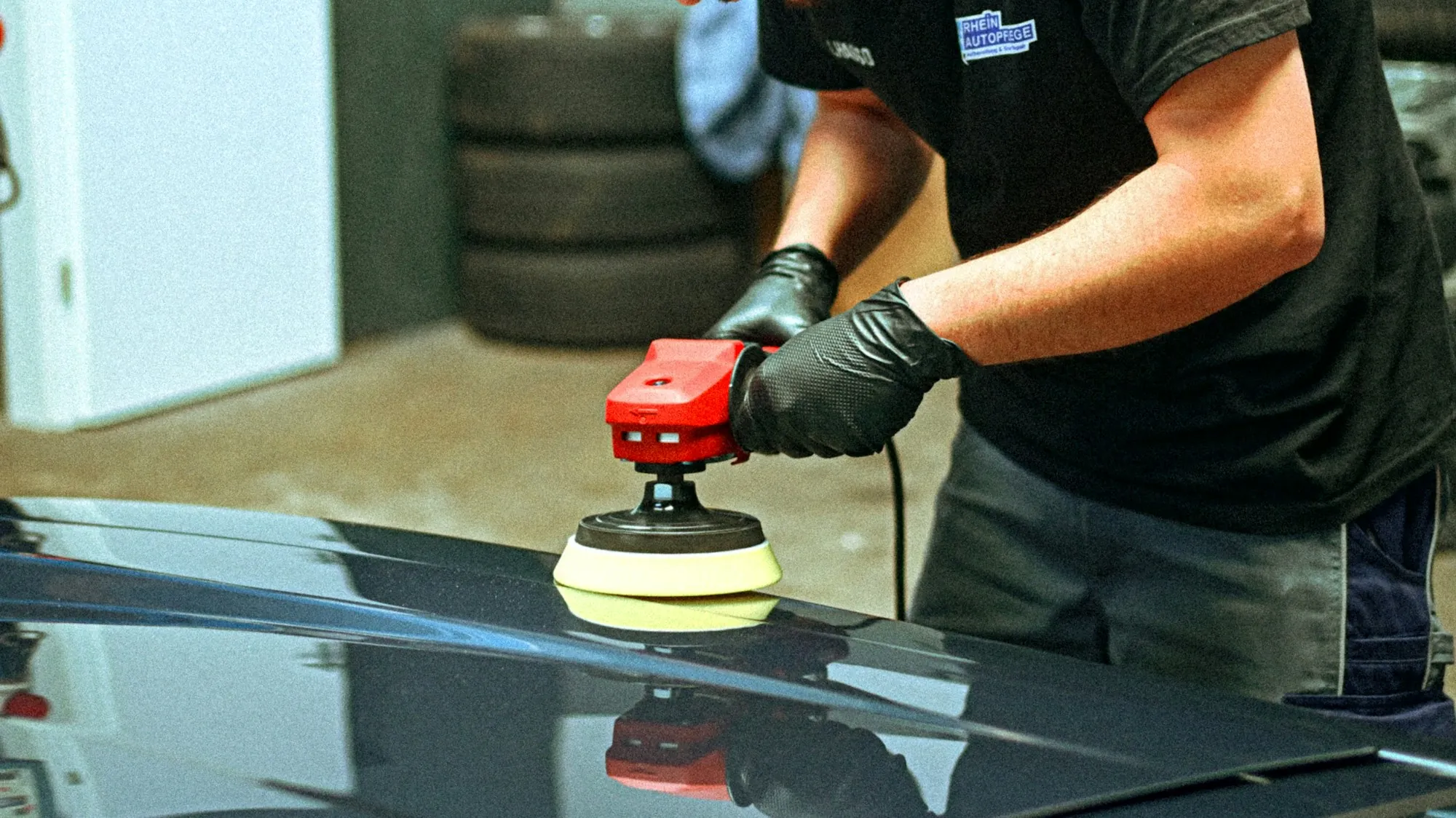
No Filler, No Primer, No New Paint
Paintless dent repair is the closest thing to undoing a dent. Long steel rods slip behind the panel and coax the metal back up in tiny increments, guided by the lines of a reflection board. There's no sanding, no filler and no fresh paint, so there's nothing to match. The factory finish you started with is the one you keep. It works best on dings, shallow dents and the rash of small dimples that spring hail leaves across hoods and roofs. It doesn't work when the paint is cracked or the metal is creased sharply. If yours falls in that group, we'll tell you straight away.
Where Paintless Work Shines
These are the parts of a paintless repair and the kinds of damage it handles best.
A paint-and-depth screening
We check for cracked paint, sharp creases and stretched metal first, because those decide whether paintless work can succeed.
Ding rash from tight parking
Small dents along doors and quarter panels from neighboring car doors are classic paintless work.
Spring hail across the top
Hoods, roofs and trunk lids dimpled by hail can often be restored dent by dent without repainting a thing.
Access without drilling
We reach the back of the panel through openings already there, removing lights, liners or headliners when needed.
A lined board to read the metal
Reflected lines on a light board bend around a dent, showing exactly where to push and when to stop.
Lifting from the outside
Where bracing blocks access from behind, glued tabs let us raise the dent from the front without harming the paint.
Raised edges settled
Pushing can leave small high spots around a dent. Those get tapped back with a soft knockdown tool until the panel is even.
Trim refitted, panel inspected
Lamps and liners we removed go back in, and the finished panel is studied outdoors from a few different angles.
What a Paintless Visit Looks Like
Read the damage under light
We look at each dent with a light board and tell you which ones qualify. Hail cars get a panel-by-panel count for the insurance file. If a dent needs paintwork, you'll hear that now, not halfway through. Most questions get answered right there at the car.
Work the metal in passes
Where a brace or liner is in the way, it comes out so the tools can get behind the dent. The dent is pushed out in many small moves, checked against the board between each. Larger dents are worked from the edges inward. It's slow on purpose, because rushed pushes leave high spots.
Refit and compare
Everything removed goes back on and gets checked for fit. We look at the panel outdoors from different angles. When the reflection runs clean across where the dent used to be, the job is done.
Why Paintless Comes First When It Can
Factory paint is the best match
No refinish, however skilled, beats the original. Keeping it means there is nothing to blend and nothing to fade differently later.
Hail season is local here
Spring storms sweep across this side of the lake most years. We're used to reading hail damage on cars that park outside along the shore.
We'll say when it won't work
Forcing a dent that should be refinished can crack the paint. If paintless isn't right, we explain the better option.
Think Your Dent Might Come Out Clean?
Let us know which panel took the ding and whether the paint looks broken. We'll let you know if paintless repair is a fit.
(000) 000-0000 — describe the ding