
Matching Paint Is a Craft, Not a Code
Your paint code is a starting point. Cars with the same code can vary between factories, production runs and seasons of sun on a driveway near Lake Ray Hubbard. So a good match means mixing the formula, spraying a test card, holding it against your car and adjusting until the two melt into each other. Texture matters too: factory clear coat has a faint ripple, and a glassy-smooth repaint stands out as clearly as the wrong shade. We blend new color into neighboring panels and reproduce that texture, so the painted area simply reads as part of the car. Humidity off the lake affects how paint flashes and cures. That's one more reason we never rush the booth.
The Layers Behind an Invisible Refinish
A refinish is a stack of careful steps. Skip one and it shows.
Formula pulled from your code
We start with your car's paint code and its known variants, then choose the closest formula for the color as it looks today.
Proof cards checked in sunlight
A sample card is sprayed and compared to your paint outdoors. The mix is adjusted until the card disappears against the panel.
A clean, sound base
Old finish is feathered smooth and the surface is cleaned of wax and oils, so new paint bonds evenly.
Masking with soft edges
Back-taped edges avoid hard paint lines, and the rest of the car is wrapped against overspray.
Sealer for an even foundation
A uniform sealer coat keeps primer spots and filler from showing through as faint shadows in the color.
Color faded across panel lines
Base coat is blended into adjoining panels, so the eye can't pick out where the new paint stops.
Clear laid down to the factory ripple
Clear coat is applied to reproduce the original orange-peel texture rather than a mirror finish that looks out of place.
Cured, refined and polished
After baking, the surface is color-sanded where needed and polished until gloss and texture match the panels around it.
From Paint Code to Perfect Match
Read the color as it is today
We look at your paint in natural light and note any fading on the panels around the repair. The formula is mixed and sprayed onto test cards. Each card is compared against the car until it vanishes. Only then does the mix go near your panel.
Prepare and spray
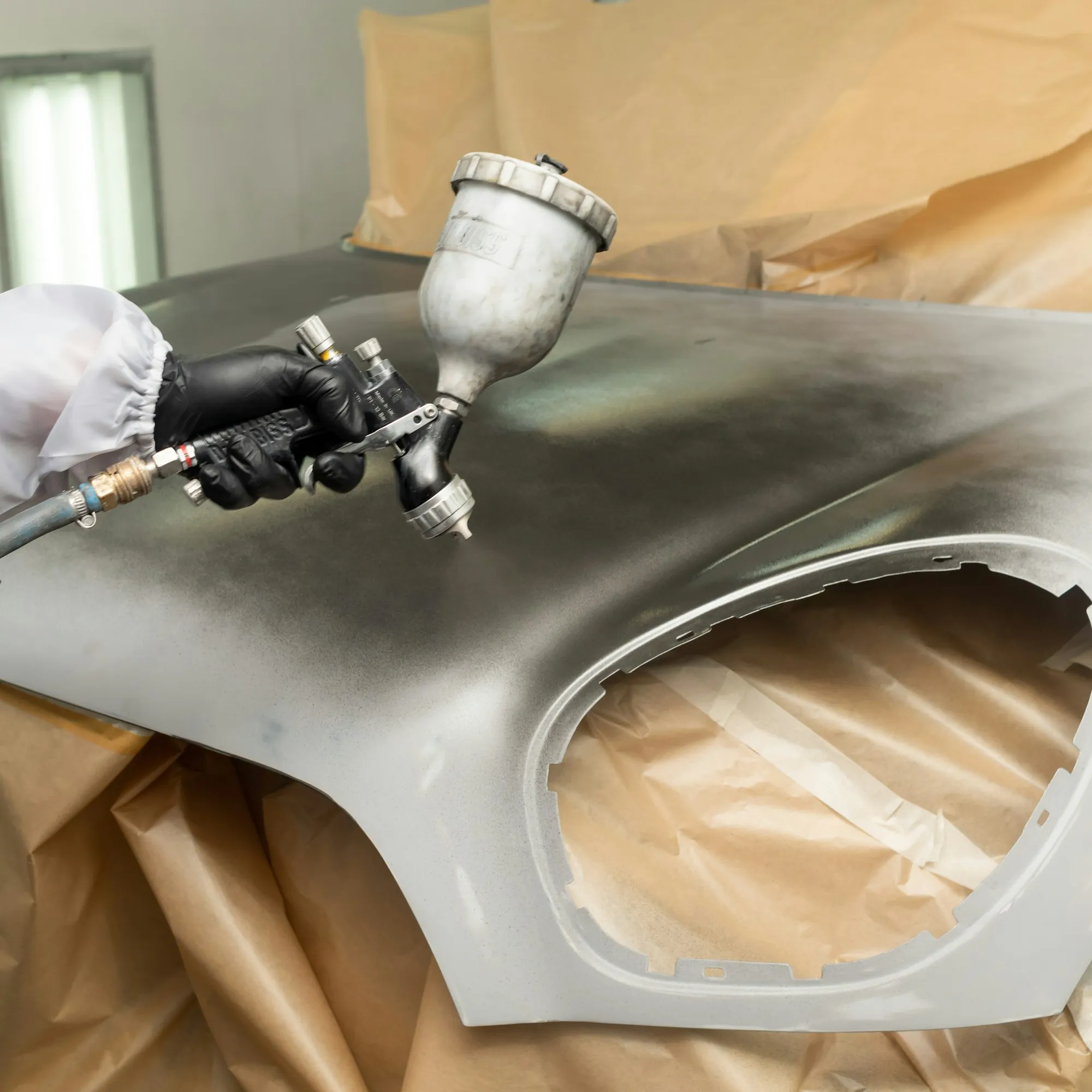
The area is sanded, cleaned, masked and sealed. Base coat is sprayed in the booth, where filtered airflow keeps dust off the wet surface. Color is faded into adjacent panels. Clear follows, applied to match the original texture.
Cure, refine, compare outdoors
Panels are baked to cure the finish fully. Small flaws are color-sanded and polished out. We roll the car outside and look at it from several angles. If a panel catches the eye, it gets corrected before we call you.
Why Our Refinishes Pass the Driveway Test
Matched outside, not just inside
Booth lights flatter paint. We judge every match under open sky, which is where your neighbors will see it.
Texture gets as much care as color
The right shade with the wrong gloss still looks repainted. We match both, panel by panel.
No rushed cures
Paint that hasn't fully cured can dull or shrink. Cure time is built into the plan, humid days and all.
Paint That Doesn't Quite Match Bothering You?
Whether it's a fresh repair or an old one that never matched, tell us what you're seeing. We'll explain how we'd bring the color and texture into line.
Ask about a color match at (000) 000-0000