
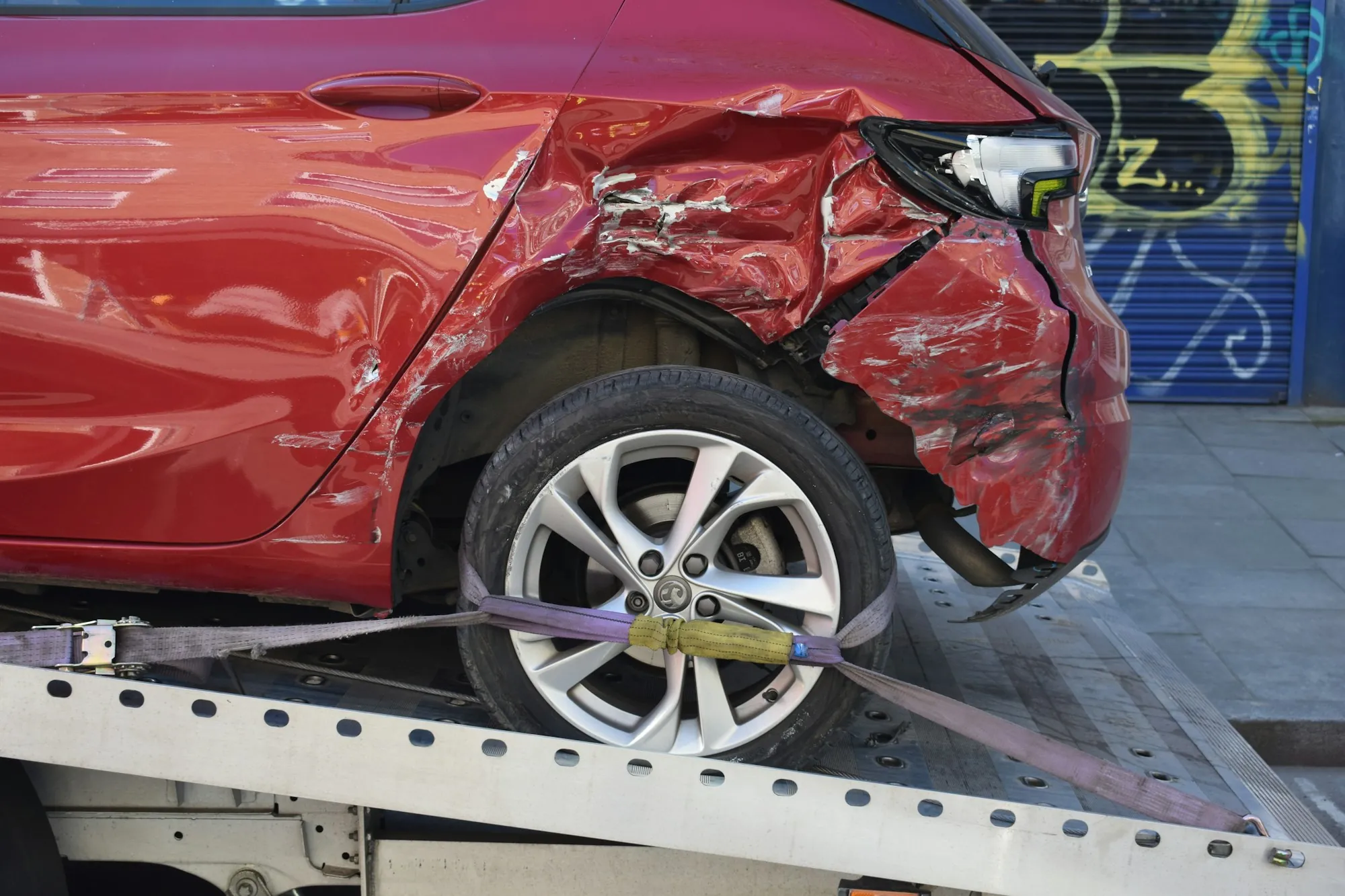
The Best Repair Is the One You Can't Find
Most people judge a collision repair by whether the car drives again. We judge it by whether you can walk around it in a parking lot and fail to find where it was hit. That means the structure underneath has to be right first, because a panel can only line up with its neighbors if the body it bolts to sits where the factory put it. Then comes the slow part: setting gaps evenly, matching the faint ripple of the original clear and blending color so it holds up in full Texas sun. Drivers bring us wrecks from all over Rowlett and from across the lake in Rockwall. Some had a fender bender, and some had a crash that bent a rail. Either way, the finish is where we spend our patience.
Everything a Wreck Touches, Put Back Quietly
A crash rarely stops at the bumper. Here is the work behind a repair you shouldn't be able to spot later.
Damage traced past the surface
We pull trim and covers off the hit area so cracked brackets and pushed-in supports show up before the estimate is final.
Body dimensions confirmed
The unibody is measured at its reference points. If anything shifted, it gets corrected before a single outer panel is hung.
Steel and plastic reshaped or renewed
Panels that can be saved are reworked, and panels that can't are replaced. The choice is explained to you in plain words.
Even spacing at every seam
Hood, fender, door and bumper gaps are set to match the undamaged side, so the eye has nothing to catch on.
Texture copied from your clear
Factory clear coat has a slight orange-peel ripple. We reproduce it so the repaired panel doesn't look glassier than the one beside it.
Color faded into the neighbors
Fresh color is blended into adjoining panels, which means there's no hard line where new paint meets old.
Electronics checked both ways
A scan before teardown and another after reassembly confirm warning lights are cleared and sensors are talking to each other.
A walk-around in open light
Before you get the keys, we look at the car outside, where mismatched color and uneven gaps have nowhere to hide.
How a Wreck Becomes an Invisible Repair
Look it over and write it up
Drive it over, or let a flatbed bring it, and we go over it panel by panel with you. Photos go in the file and every repair line is written down. When insurance is involved, you'll know which items the adjuster will review. You leave knowing what's planned and why.
Open it up and set the structure
With approval in hand, the damaged area comes apart. Hidden damage gets photographed and reported before any extra work happens. Structure is measured and corrected first. Only then do the outer panels go on, fitted to the gaps on the untouched side.
Paint, assemble, compare
Your paint formula is mixed, then tuned with spray-out cards held against the car. After the booth, the panels are polished to match the original gloss. We reassemble, scan and drive it. Then we compare both sides of the car one more time before we ring you.
Why Rowlett Drivers Trust Us With the Finish
We compare against the good side
Every gap, every line and every shade is checked against the half of the car that wasn't hit. That's our standard, and it's a demanding one.
Structure before cosmetics
A beautiful panel on a shifted body will never line up. We fix what's underneath first so the finish has something true to sit on.
You hear the plan before the work
If something new turns up during teardown, you get a call explaining it before anything changes. Pickup holds nothing unexpected.
Want the Wreck to Disappear?
Share how the crash happened and where the car sits today. We'll explain what happens next and what the finished repair should look like.
Start the conversation at (000) 000-0000